What Benefits Do Solar Panels Offer for Your Business? Solar panels might be the right solution for your business. In this article, we will discuss the benefits of solar panels for your business, how they work, as well as the challenges and incentives you may encounter in implementing them.
Solar Panels: How Do They Work?
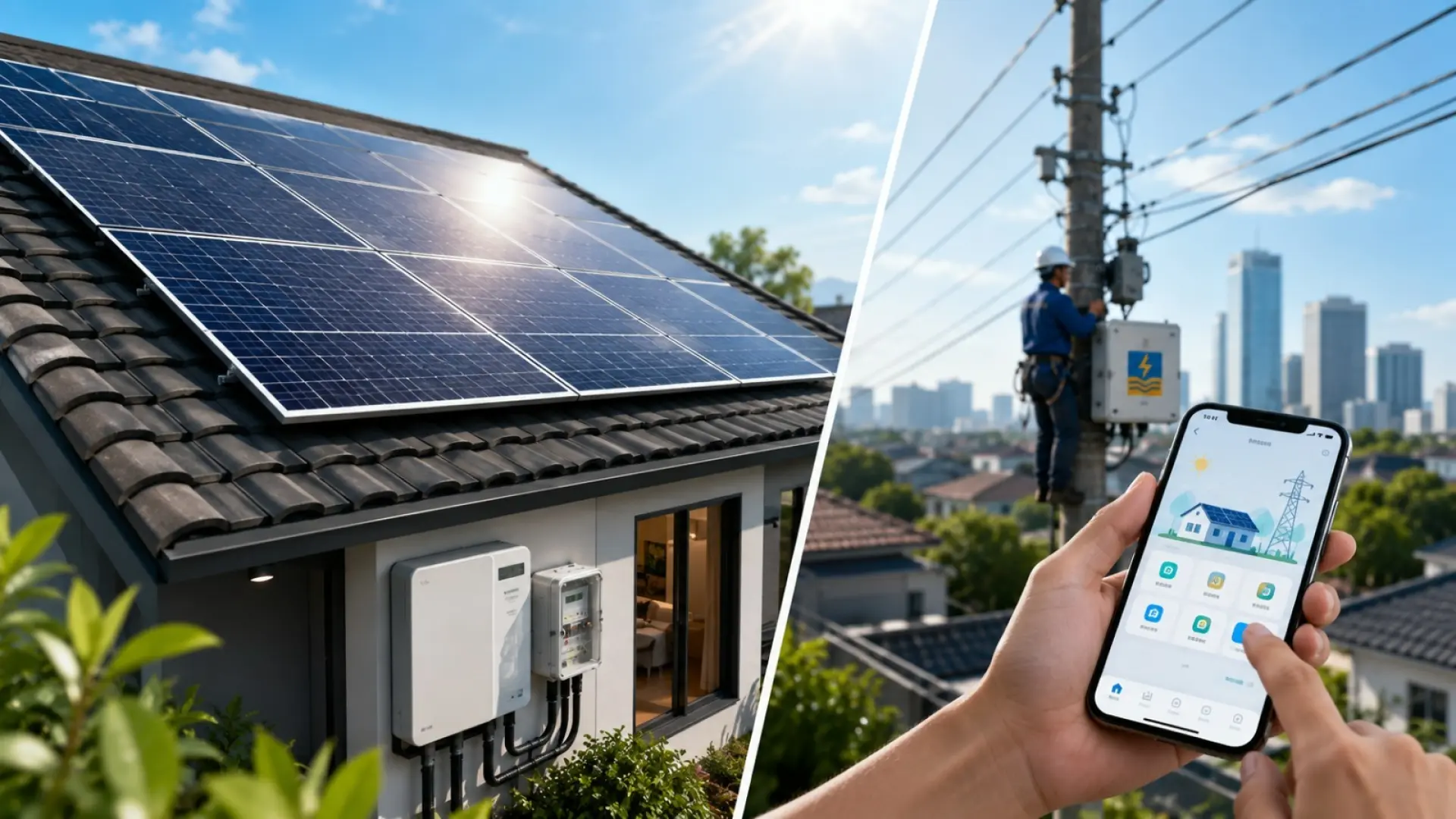
Before delving into their benefits, let's understand how solar panels work. Solar panels harness solar energy and convert it into electrical energy that can be used to supply your company's electricity needs. This process occurs through several key components, including photovoltaic cells, inverters, and energy storage batteries.
7 Benefits of Solar Panels for Your Business
There are several benefits of using solar panels if you can implement them in your business. Here are some advantages you should know!
1. Energy Efficiency and Cost Savings
One of the primary benefits of using solar panels is high energy efficiency. Solar panels can generate electricity at a lower cost than conventional power plants, reducing your company's electricity bills. Additionally, relying on renewable resources allows you to reduce dependence on fossil fuels, which can be subject to fluctuating prices and availability.
What Changed in 2024: Indonesia Abolished Net Metering
If you're researching solar for your business in Indonesia, one regulatory change matters more than any other: in 2024, the Ministry of Energy and Mineral Resources (ESDM) issued Regulation No. 2/2024, which abolished net metering for rooftop solar. Under the old rules (Permen ESDM No. 26/2021), excess electricity your panels exported to PLN's grid would offset your bill. That is no longer the case for new installations — exported power is no longer credited.
Businesses that registered under the old scheme before the new regulation keep net metering for 10 years. For everyone else, the new regulation also introduces a quota system: rooftop solar capacity is allocated in five-year blocks per PLN regional distribution unit (UP3), announced through PLN's official channels.
The practical implication: the financial case for commercial solar in Indonesia now rests on self-consumption — using the power you generate during the day to directly offset what you'd otherwise buy from PLN — rather than selling surplus back to the grid. This makes system sizing more important than ever; a system matched closely to your daytime load profile will outperform an oversized one that generates power you can't use or export for credit.
For a full breakdown of the quota system, the application process, and the 2026 capacity allocations, see our complete guide to Rooftop Solar PV in Indonesia.
2. Positive Environmental Impact
Adopting solar panels also means contributing to environmental preservation. Solar panels do not produce greenhouse gas emissions, helping to mitigate the impact of climate change. By investing in renewable energy like solar panels, your business can take a greener and more environmentally responsible path.
3. Promotion of Sustainability and Social Responsibility
Businesses that use solar panels are often viewed more favorably by the public and customers due to their commitment to sustainability and social responsibility. In an increasingly environmentally conscious world, using renewable energy sources like solar panels can add value to your company's image.
4. Long-Term Investment
Although the initial investment in solar panels may appear high, in the long run, your business will experience cost savings. By relying on free and renewable energy sources, you can reduce dependence on electricity from the public grid, which tends to be more expensive.
5. Reduced Dependence on Fossil Fuels
Relying on fossil fuels comes with the risk of fluctuating prices and limited supply. By using solar panels, you can reduce dependence on non-renewable resources, making your business more stable in terms of energy and finances.
6. Where Indonesia's Incentives Actually Apply
It's worth being precise here: Indonesia's main fiscal incentive for solar is a corporate tax holiday for large-scale investment in solar manufacturing (Pioneer Industry status under OSS RBA) — capital investment of IDR 500 billion+ can qualify for a 100% Corporate Income Tax (PPh Badan) reduction for 5–20 years. This is aimed at companies building panel or cell manufacturing facilities, not at a business simply installing rooftop panels to power its own operations.
For most businesses, there isn't a direct rooftop-solar tax credit to rely on. The return instead comes from the mechanism above — avoiding retail electricity purchases from PLN — which is why accurate system sizing and a realistic payback calculation matter more than chasing an incentive that may not apply to your business.
7. What the Payback Actually Looks Like
Industry analysis of Indonesia's commercial and industrial rooftop segment puts simple payback at roughly 7.6 years, improving to about 5.3 years when financed at a 12% cost of capital — with equity-financed projects seeing payback in the 4.2–6.3 year range and pre-tax internal rates of return of 18–28% for industrial customers (SUPRA International, 2026 Indonesia Solar PV Market Outlook). These figures assume secure building tenure of 10+ years and roof structure capable of supporting the additional 15–20 kg/m² load — both worth confirming with a site assessment before committing to a system size.
8 Ways to Implement Solar Panels in Your Business
Implementing solar panels in your business can be a smart move to reduce operational costs and enhance the sustainability of your business. However, like any business initiative, good planning and sufficient knowledge about solar panel technology are required to ensure successful implementation.
1. Identify Energy Needs
The first step before installing solar panels is to identify your business's energy needs. Study your company's electricity usage over the past few months to determine how much energy needs to be generated by solar panels. This will help you determine the appropriate size of the solar system to meet your energy needs.
2. Consult with Solar Panel Service Providers
If you have no prior experience with solar panels, consult with solar panel service providers. They will help you plan the project efficiently, select the best location for solar panels, and provide cost and return on investment estimates. You can consult reliable solar panel service providers like Apollo Solar Indonesia.
3. Budget and Investment Planning
After obtaining information from the energy consultant, create a budget and investment plan for implementing solar panels. Consider the initial costs for purchasing and installing solar panels, as well as the estimated long-term energy cost savings. Although the initial investment may seem significant, remember that this is a long-term investment that will yield benefits over time.
4. Choose the Right Location
The location of solar panels is crucial for achieving maximum efficiency. Ensure that the panels are placed in an area that receives ample sunlight exposure throughout the day. Avoid shaded or obstructed locations that can hinder sunlight.
5. Professional Installation
Ensure that the solar panels are installed by experienced professionals. Proper and accurate installation will ensure optimal performance of the solar panels. You can purchase solar panels from the right service provider like Apollo Solar Indonesia.
6. Monitor and Regular Maintenance
Once the solar panels are installed, it is essential to monitor their performance regularly. Check if the panels are functioning properly, and address any issues promptly. Regular maintenance is also necessary to ensure that the solar panels continue to function well and deliver the expected results.
7. Promote Your Success
After successfully implementing solar panels in your business, promote this achievement to your employees, customers, and the public. Share how the use of renewable energy has helped your business reduce costs and contribute to the environment. This can enhance your company's image in the eyes of the public.
8. Collaborate with Renewable Energy Companies
To continually optimize the use of solar panels, consider collaborating with renewable energy companies. Through collaboration, you can gain knowledge about the latest developments in solar panel technology and maximize its benefits.
How Efficient Is Solar for Indonesian Businesses?
Indonesia's location near the equator gives most regions consistent solar irradiance year-round, which is favorable for panel output — but real-world efficiency depends more on your roof orientation, shading, and how closely your system is sized to your actual daytime power draw than on the panels alone. Since net metering ended in 2024, a system that's well-matched to your load profile will consistently outperform an oversized one on a per-rupiah basis, because unused excess generation no longer earns bill credit.
For a deeper look at what drives panel efficiency and how to compare ratings between models, see our guide to solar panel efficiency.
Apollo: Trusted Solar Panel Solution in Indonesia
Looking to switch to renewable energy and contribute to a greener future? PT Apollo Solar Indonesia is the answer! As one of the best Solar Panel Companies in Indonesia, Apollo Indonesia is committed to becoming a leading photovoltaic manufacturer in the country, providing high-quality solar panel solutions in Indonesia.
Don't hesitate any longer to transition to renewable energy. Support and join Apollo Indonesia in embracing a greener and more sustainable future. Contact us today for more information and get smart energy solutions for your business.